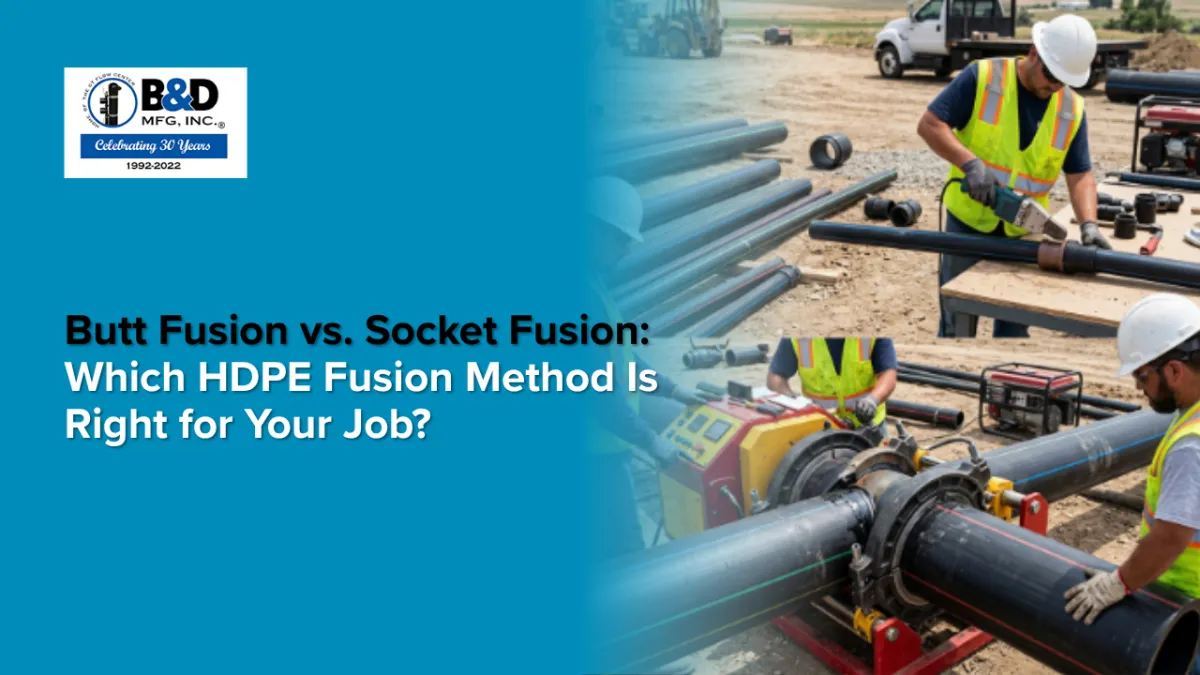
Butt Fusion vs. Socket Fusion: Which HDPE Fusion Method Is Right for Your Job?
If you work with HDPE pipe, you already know that a joint is only as good as the fusion behind it. But with more than one accepted method on the job site, butt fusion vs socket fusion is one of the most common questions contractors, municipalities, and utility crews ask before ordering equipment. Both methods create a permanent, fused joint, but they're built for different pipe sizes, different applications, and different crews.
This guide breaks down how each method works, where it's typically used, and how to choose the right fusion equipment for your next project.
What Is Butt Fusion?
Butt fusion joins two pipe ends of the same diameter by heating both faces on a heater plate until they reach the correct melt temperature, then pressing them together under controlled pressure until they cool and fuse into a single, continuous piece of pipe.
Because the process fuses the entire cross-section of the pipe wall, a properly made butt fusion joint is typically as strong as the pipe itself. That makes it the standard method for larger-diameter mainline, transmission, and municipal water or gas distribution work.
Butt fusion is performed with a butt fusion machine, which clamps, faces, heats, and fuses the pipe ends in a controlled sequence. B&D carries butt fusion equipment built for a range of pipe diameters, from mid-size IPS pipe up through large-diameter trailer-mounted units for major mainline runs.
Typical Butt Fusion Applications
Municipal water and sewer mains
Gas distribution and transmission lines
Long, straight pipe runs where a strong, permanent joint matters most
Larger-diameter pipe where socket fusion equipment isn't practical
What Is Socket Fusion?
Socket fusion joins a pipe end to a fitting rather than pipe-to-pipe. A heated iron (sometimes called a fusion tool) heats the outside of the pipe and the inside of the fitting socket at the same time. Once both surfaces reach temperature, the pipe is pushed into the fitting socket, where the melted layers bond as they cool.
Socket fusion is generally used on smaller-diameter pipe and is well suited to service lines, meter sets, and situations where you're joining pipe to fittings like couplings, elbows, or tees rather than running long straight sections.
The equipment side is lighter and more portable than a butt fusion machine. Crews typically work with socket fusion irons and kits or a full socket fusion kit, along with the socket fusion tools needed to face and prep the pipe before fusing.
Typical Socket Fusion Applications
Gas and water service lines
Meter set assemblies and short fitting connections
Repairs and tie-ins on smaller-diameter pipe
Jobs where a compact, portable tool setup is more practical than a full butt fusion machine
Butt Fusion vs. Socket Fusion: Key Differences
Note: Exact size ranges vary by machine and fitting model. Check the specifications on each product page, or contact B&D's team to confirm the right equipment for your pipe diameter and application.
Where Electrofusion Fits In
Butt fusion and socket fusion aren't the only options on the table. Electrofusion uses fittings with an embedded heating element, connected to an electrofusion processor that runs a controlled electrical current through the fitting to melt and fuse the joint from the inside out. It's often the preferred choice for tie-ins, repairs, and tight or awkward spaces where a butt fusion machine won't fit and a standard socket joint isn't practical.
B&D stocks electrofusion fittings alongside processors, so crews that need all three fusion methods on hand for a job can source everything from one supplier.
How to Choose the Right Fusion Method

In practice, the choice usually comes down to three questions:
Pipe size: Larger-diameter mainline generally calls for butt fusion; smaller-diameter service work is often better suited to socket fusion.
Joint type: Joining pipe to pipe points toward butt fusion; joining pipe to a fitting points toward socket fusion or electrofusion.
Site conditions: Tight trenches, tie-ins, and repair work often favor the more compact electrofusion or socket fusion setups over a full butt fusion machine.
Many crews end up keeping equipment for more than one method on the truck, since a single project can involve mainline runs, service connections, and repair tie-ins all in the same day. Browse B&D's full range of HDPE fittings and fusion equipment to see what fits your crew's workload.
Frequently Asked Questions
Is butt fusion stronger than socket fusion?
Both methods produce strong, permanent joints when done correctly. Butt fusion fuses the full cross-section of matching pipe ends, which is why it's the standard for mainline and transmission work, while socket fusion is built specifically for joining pipe to fittings rather than pipe to pipe.
What size pipe is butt fusion used for?
Butt fusion is generally used on mid-size to large-diameter IPS pipe. Exact ranges depend on the specific machine; see B&D's butt fusion equipment listings for size specifications by model.
What size pipe is socket fusion used for?
Socket fusion is typically used on smaller-diameter IPS pipe, most often for service lines and fitting connections. B&D's socket fusion irons and kits list available working ranges by tool.
Can I use socket fusion and butt fusion equipment on the same job?
Yes. Many projects involve both a mainline run and smaller service connections or repairs, so crews commonly carry equipment for both methods, and often electrofusion tools as well.
Do I need different training for butt fusion versus socket fusion?
Each method has its own procedure and equipment, so operators typically train specifically on the machine or tool they'll be using. Manufacturer specifications and joining procedures should be followed for each piece of equipment.
Where can I buy HDPE fusion equipment?
B&D Mfg. stocks butt fusion machines, socket fusion irons and kits, and electrofusion processors and fittings. Browse the full lineup on the B&D Mfg. homepage or reach out to the team directly for help matching equipment to your project.
Get the Right Fusion Equipment for the Job
Whether your next project calls for mainline butt fusion, service-line socket fusion, or electrofusion for a tricky tie-in, having the right equipment on hand keeps crews moving and joints reliable. Explore B&D's full catalog of fusion equipment, or contact the B&D team to talk through which method and machine fit your pipe sizes and job site.
Ready to gear up? Shop butt fusion machines or shop socket fusion kits today, or contact B&D Mfg. for a quote tailored to your project.