Geothermal Flow Center Installation Guide | Step-by-Step HVAC Setup & Pump Modules
Installing a geothermal system is one of the most efficient ways to heat and cool a building, but its performance depends heavily on one critical component: the flow center. A properly installed geothermal flow center ensures smooth circulation of fluid between the heat pump and ground loop system, optimizing energy transfer and long-term reliability.
In this detailed guide, we’ll walk through everything you need to know about geothermal flow center installation, including system components, installation steps, pump module setup, common mistakes, and maintenance best practices.
Looking to upgrade your HVAC system?
What Is a Geothermal Flow Center?
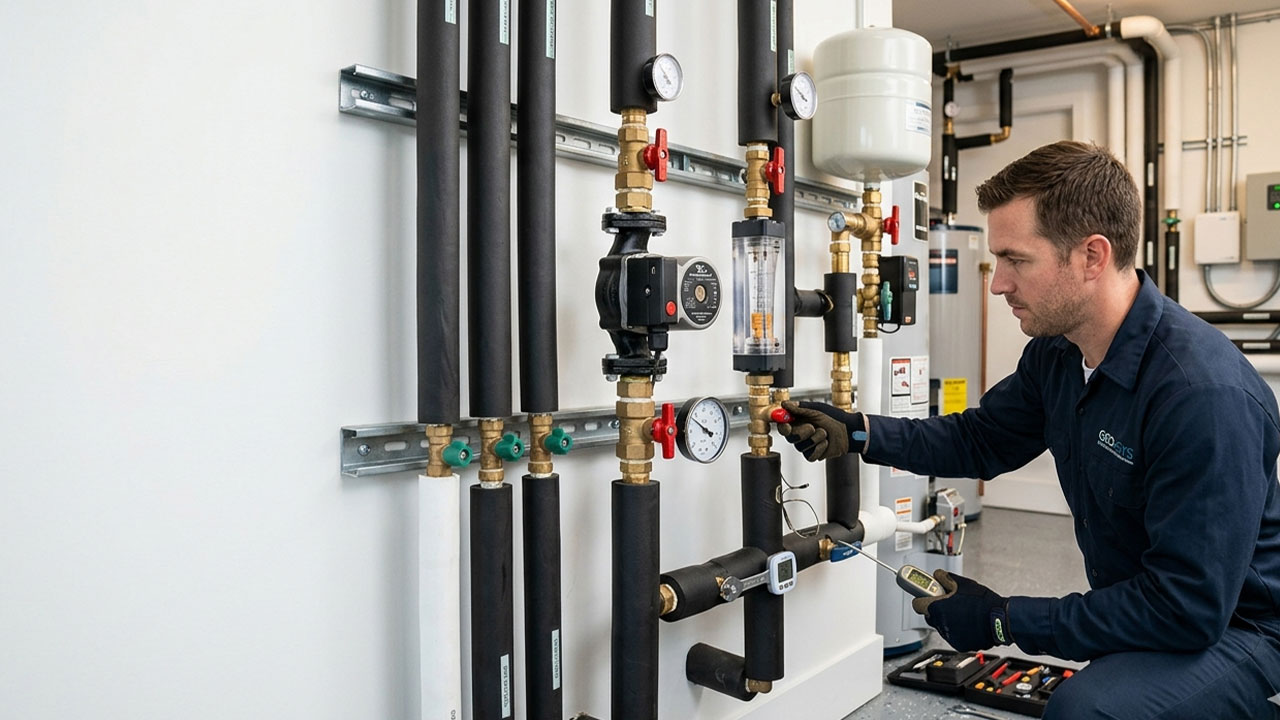
A geothermal flow center is the circulation hub of a geothermal HVAC system. It connects the heat pump to the underground loop field and controls fluid movement using pumps, valves, and sometimes expansion tanks.
Systems like Geothermal Flow Centers are designed to ensure consistent pressure, efficient fluid flow, and minimal energy loss.
Key Functions:
Circulates antifreeze solution or water through ground loops
Maintains correct pressure in the system
Houses circulation pumps (often dual pump configuration)
Removes air and prevents system cavitation
Improves geothermal heat pump efficiency
Without a properly installed flow center, even the best geothermal HVAC system will underperform.
Types of Geothermal Flow Centers
Before installation, it’s important to understand the main types of flow centers used in geothermal systems:
1. Pressurized Flow Centers
Maintain constant pressure in closed-loop systems
Ideal for residential and commercial geothermal HVAC installation
2. Non-Pressurized Flow Centers
Use open reservoir tanks
Easier to service but less common in modern systems
3. Dual Pump Modules
Many modern systems use built-in geothermal pump modules with two circulating pumps for redundancy and improved flow stability.
Tools & Materials Needed for Installation
Before starting installation, gather the following:
Geothermal flow center unit
Pipe fittings (PEX, HDPE, or copper depending on system design)
Isolation valves
Flexible connectors
Pipe insulation
Mounting brackets
Electrical wiring tools
Glycol solution (if required)
Pressure gauge
Bleed kit for air removal
Step-by-Step Geothermal Flow Center Installation Guide
Step 1: Plan System Layout
Start by reviewing your geothermal HVAC system layout:
Identify supply and return lines from the ground loop
Determine heat pump placement
Ensure enough clearance for maintenance
Proper planning reduces installation errors and improves long-term efficiency.
Step 2: Mount the Flow Center
Install the flow center in a vertical position close to the geothermal heat pump:
Use vibration-resistant wall brackets
Ensure accessibility for servicing pumps and valves
Maintain clearance for pipe connections
Avoid placing it in freezing or overly humid environments.
Step 3: Connect Ground Loop Piping
Next, connect the underground loop system:
Attach supply and return lines securely
Use proper fittings to prevent leaks
Ensure directional flow alignment (very important)
Incorrect piping direction can severely reduce system performance.
Step 4: Connect to Heat Pump
Link the flow center to the geothermal heat pump:
Connect supply line to inlet
Connect return line to outlet
Install isolation valves for maintenance control
This step ensures proper circulation between the loop field and HVAC unit.
Step 5: Install Pump Modules
Most modern systems include integrated geothermal pump modules.
Key installation tips:
Ensure pumps are properly seated and aligned
Check electrical compatibility (voltage & phase)
Secure wiring connections safely
Confirm pump direction before powering system
Pump orientation mistakes are one of the most common installation errors.
Step 6: Fill and Flush the System
Before starting operation:
Flush all air from the system
Fill with water or antifreeze solution
Use a pressure gauge to monitor system stability
Bleed air from all ports and valves
Air trapped in the system reduces efficiency and can damage pumps.
Step 7: Pressure Testing
Conduct a pressure test:
Maintain recommended PSI levels
Monitor for leaks over 24 hours
Tighten fittings if necessary
Never skip this step in geothermal HVAC installation.
Step 8: Electrical Connection & Startup
Once plumbing is complete:
Connect pump wiring to control panel
Power on system gradually
Check flow rates and pressure readings
Listen for unusual pump noise
If everything is stable, the system is ready for operation.
Common Installation Mistakes to Avoid
Even experienced installers can make errors. Avoid these common issues:
1. Incorrect Pump Orientation
Reversed pumps reduce efficiency and may damage the system.
2. Poor Air Removal
Air pockets cause cavitation and noise issues.
3. Undersized Piping
Restricts flow and reduces heat transfer efficiency.
4. Improper Insulation
Leads to thermal loss and reduced system performance.
5. Skipping Pressure Testing
Can result in long-term leaks and system failure.
Maintenance Tips for Geothermal Flow Centers
Proper maintenance extends system life and ensures efficiency.
Regular Checks:
Inspect pump operation monthly
Check system pressure quarterly
Clean filters and strainers
Monitor glycol levels (if applicable)
Annual Maintenance:
Flush system if contamination is detected
Inspect valves and fittings
Test pump performance
Check electrical connections
Well-maintained systems can last 20–25 years or more.
Benefits of Proper Flow Center Installation
A correctly installed flow center significantly improves geothermal system performance:
Higher energy efficiency
Lower utility bills
Reduced pump wear and tear
Stable indoor temperature control
Longer HVAC system lifespan
This is why professional geothermal HVAC installation is strongly recommended.
When to Call a Professional Installer
You should consider expert help if:
You are installing a commercial geothermal system
Loop field design is complex
Electrical configuration is advanced
You are unsure about pressure balancing
Incorrect installation can lead to expensive long-term repairs.
Need expert help with geothermal HVAC installation?
Conclusion
A geothermal flow center is the heartbeat of any geothermal HVAC system. Whether you're installing a residential unit or a large commercial setup, proper installation ensures optimal performance, efficiency, and long-term durability.
By following this guide and using high-quality systems like Geothermal Flow Centers, you can significantly improve system reliability and energy savings.
FAQs
1. What is the purpose of a geothermal flow center?
It circulates fluid between the ground loop and heat pump, ensuring efficient heat transfer in geothermal HVAC systems.
2. How long does geothermal flow center installation take?
Most residential installations take 4–8 hours depending on system complexity.
3. Do all geothermal systems need a flow center?
Yes, nearly all closed-loop geothermal HVAC systems require a flow center for proper circulation.
4. What is the lifespan of a geothermal flow center?
With proper maintenance, it can last 15–25 years or more.
5. Can I install a geothermal flow center myself?
It is possible for experienced technicians, but professional installation is recommended for efficiency and safety.