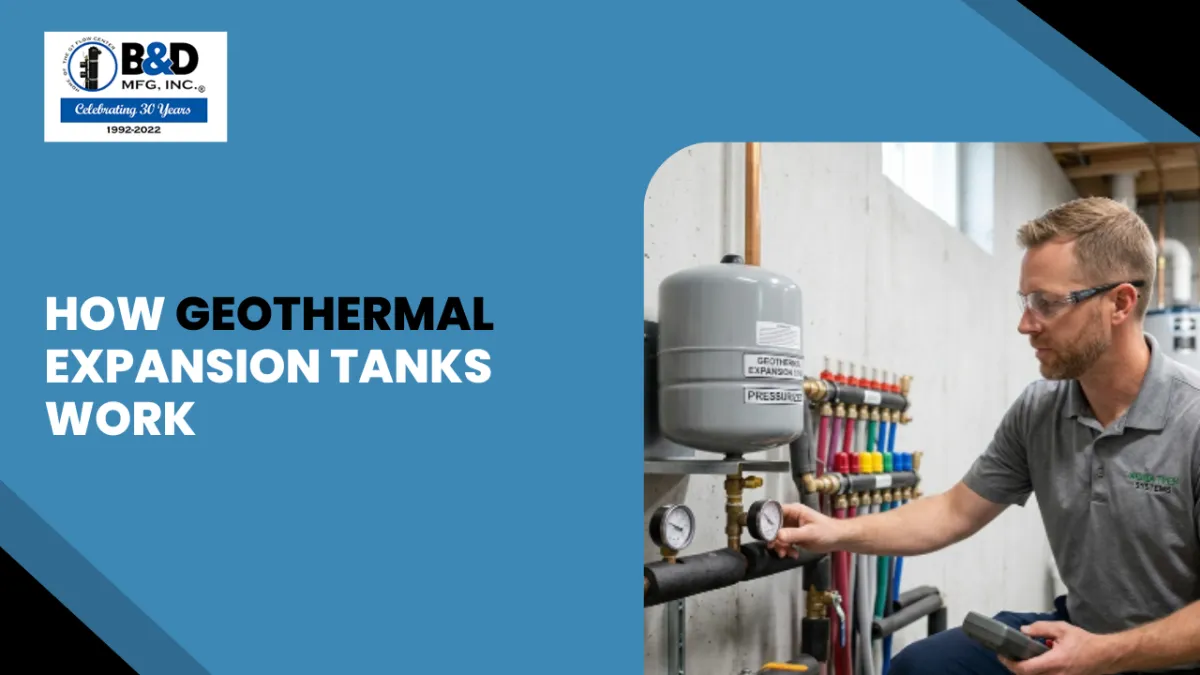
How Geothermal Expansion Tanks Work | Geothermal System Pressure Tanks | BD Mfg
Geothermal heating and cooling systems are among the most efficient energy solutions available today, but like any closed-loop hydronic system, they rely on precise pressure management to perform safely and consistently. At the core of that pressure management sits a component that often goes unnoticed until something goes wrong: the geothermal expansion tank.
In this guide, we break down exactly how geothermal expansion tanks work, why they're critical geothermal components, and what to look for when selecting or maintaining geothermal system pressure tanks for your installation.
What Is a Geothermal Expansion Tank?
A geothermal expansion tank, sometimes called a geothermal system pressure tank or thermal expansion tank, is a sealed vessel designed to absorb the excess pressure and volume changes that occur as the fluid in a geothermal loop heats and cools during normal operation.
Water and antifreeze mixtures, like propylene glycol, expand when heated. In a closed geothermal loop where fluid cannot escape, that expansion creates dangerous pressure spikes. Without an expansion tank, those spikes could:
Rupture pipes or fittings
Damage the heat pump compressor
Trigger repeated pressure relief valve discharges
Shorten the lifespan of pumps and loop components
The expansion tank solves this by providing a controlled space where the fluid can expand and contract without putting stress on the rest of the system.
How Geothermal Expansion Tanks Work: Step by Step
Understanding the mechanism of a geothermal expansion tank starts with its internal structure. Most modern tanks used in geothermal applications are bladder-type or diaphragm-type pressure tanks. Here's how the process works:
1. Pre-Charged Air Chamber
Inside the tank, a rubber bladder or diaphragm separates two chambers. One side contains pressurized air or nitrogen; the other connects to the geothermal fluid loop. Before installation, the air side is pre-charged to a pressure that matches the system's fill pressure — typically between 12 and 30 PSI, depending on the system design.
2. Fluid Enters During Heating
As the geothermal fluid heats up and expands, it pushes into the tank's fluid side. The bladder compresses the air chamber to accommodate the incoming volume. The system pressure rises slightly but stays within safe operating limits, rather than spiking uncontrollably.
3. Fluid Returns During Cooling
When the system cools and fluid contracts, the pre-charged air pushes back, returning the fluid to the loop. This constant back-and-forth cycling is what keeps the geothermal system pressure tanks in equilibrium throughout daily operation.
4. Pressure Relief as a Safety Backup
Even with an expansion tank in place, most geothermal systems include a pressure relief valve as a secondary safety measure. If the expansion tank fails or is undersized, the relief valve discharges excess pressure before damage occurs.
Need geothermal expansion tanks for your next project?
Explore BD Manufacturing's Geothermal Components
Types of Geothermal Expansion Tanks
Not all expansion tanks are built the same. Selecting the right type for a geothermal system depends on fluid compatibility, operating pressure, and system volume. The three most common types include:
For most modern closed-loop geothermal installations, bladder-type expansion tanks are the preferred choice. They offer excellent fluid isolation, long service life, and compatibility with glycol-based antifreeze mixtures commonly used in geothermal systems.
Key Geothermal Components That Work Alongside the Expansion Tank
The expansion tank doesn't work in isolation. It's part of a broader network of geothermal components that collectively manage pressure, flow, and thermal transfer. The most important companion components include:
Move fluid through the ground loop and into the heat pump. Proper pump sizing ensures the expansion tank sees consistent operating pressures.Circulator Pumps:
Act as a safety backstop if the expansion tank is overwhelmed or fails. Set to discharge at a pressure just above the tank's design range.Pressure Relief Valves:
Remove entrained air from the fluid, which can otherwise cause false pressure fluctuations and reduce expansion tank efficiency.Air Separators:
Combine pumps, valves, and fittings into a single manifold assembly. The expansion tank typically ties into the flow center's supply or return line.Flow Centers:
Allow technicians to add fluid, check pressures, and verify the expansion tank is operating within range during commissioning and servicing.Fill Valves and Pressure Gauges:
Sizing a Geothermal Expansion Tank: What Matters
Undersizing is one of the most common mistakes made when specifying geothermal system pressure tanks. An expansion tank that's too small will cycle rapidly, wear out the bladder prematurely, and fail to adequately buffer pressure spikes.
Proper sizing depends on several variables:
Larger loop systems require larger tanks. Calculate the total volume of fluid in the ground loop, headers, and heat pump.Total system fluid volume:
Higher temperatures mean greater fluid expansion and a larger required tank volume.Maximum operating temperature:
Propylene glycol expands differently than water. Sizing calculations must account for the specific heat expansion coefficient of the fluid mixture.Fluid type:
The tank must be sized to maintain pressure within the band between the minimum fill pressure and the relief valve set point.System fill pressure and relief valve setting:
Most geothermal system designers use the ASHRAE Handbook of HVAC Systems and Equipment or manufacturer sizing calculators to determine the correct tank volume. When in doubt, sizing up by one model is always a safer choice than undersizing.
Signs Your Geothermal Expansion Tank May Need Attention
A properly functioning expansion tank requires minimal maintenance — but that doesn't mean it should be ignored. Watch for these warning signs that indicate the tank or its bladder may be failing:
If your relief valve is releasing water regularly, the expansion tank may be waterlogged or undersized.Frequent pressure relief valve discharge:
A healthy system holds pressure steadily. Wild swings suggest the tank isn't absorbing volume changes properly.Rapid pressure fluctuations at the gauge:
Water coming from the air valve indicates a ruptured bladder — the tank needs replacement.Water near the tank's air valve (Schrader valve):
If you constantly need to add water, the expansion tank may have lost its pre-charge pressure.System pressure that won't hold:
Annual inspection of the expansion tank's air pre-charge pressure is a simple and effective maintenance step. Use a standard tire pressure gauge on the Schrader valve (with the system at zero pressure) to verify the charge matches the original specification.
Have questions about your system's components?
Contact the BD Manufacturing team today
Why Quality Geothermal Components Matter
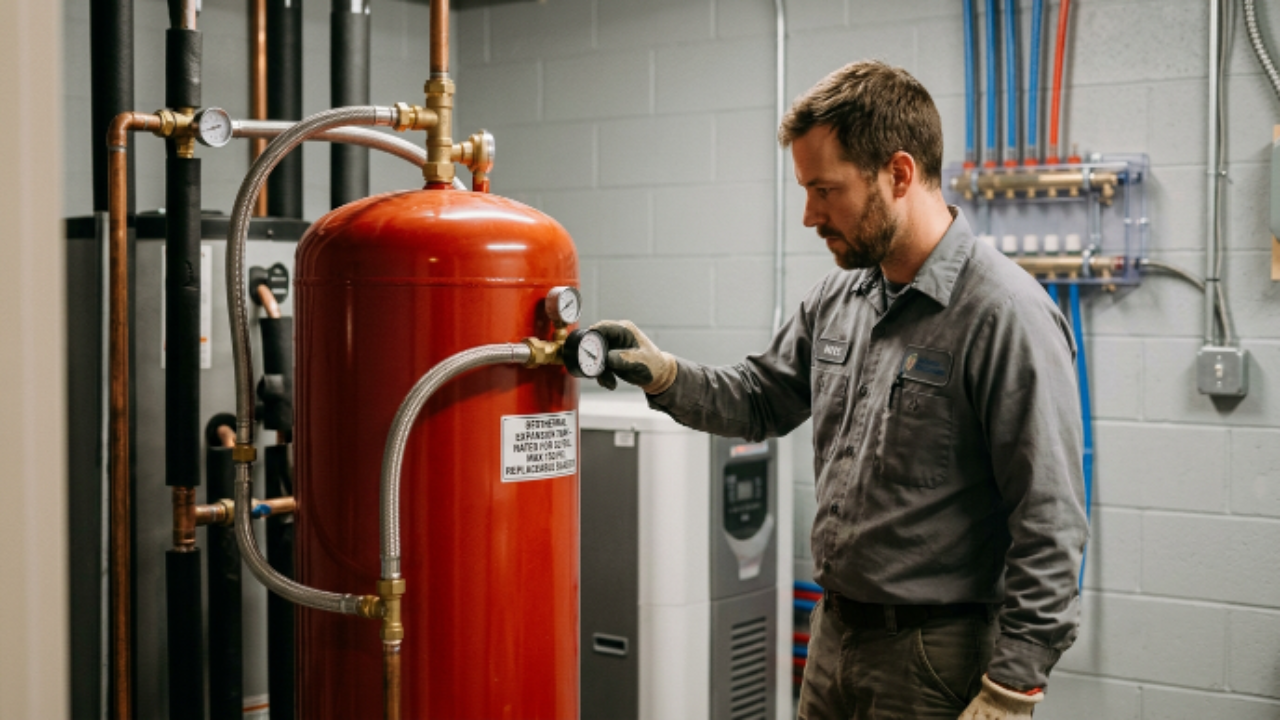
In geothermal systems, component quality directly affects system longevity and efficiency. A low-quality expansion tank with a thin bladder may last only a few years before waterlogging, leaving the system unprotected and the owner facing an emergency service call in the middle of winter.
Specifying purpose-built geothermal system pressure tanks, designed and rated for the pressures, temperatures, and fluid types common in geothermal loops, dramatically reduces the risk of premature failure. Look for tanks that are:
Rated for glycol-based fluids (not just water)
Built with replaceable bladders for long-term serviceability
Pre-charged at the factory for consistent installation performance
Sized and certified for geothermal operating pressure ranges
At BD Manufacturing (bdmfginc.com), we supply geothermal contractors and engineers with the high-quality geothermal components they need to build systems that perform for decades. From expansion tanks to flow centers, our inventory is built around the real demands of geothermal installations.
Frequently Asked Questions: Geothermal Expansion Tanks
Q: What is the purpose of an expansion tank in a geothermal system?
A: An expansion tank absorbs the volume increase that occurs when geothermal loop fluid heats up, preventing dangerous pressure spikes that could damage pipes, fittings, the heat pump, and other system components.
Q: How do I know what size expansion tank I need for my geothermal system?
A: Sizing depends on total system fluid volume, operating temperature range, fluid type (water vs. glycol mix), fill pressure, and relief valve setting. Use ASHRAE guidelines or manufacturer sizing tools or consult a geothermal system engineer for complex installations.
Q: How often should a geothermal expansion tank be inspected?
A: At a minimum, inspect the pre-charge air pressure annually. A full inspection, including checking for waterlogging, bladder integrity, and pressure trends, should be part of every routine geothermal system maintenance visit.
Q: Can I use a standard plumbing expansion tank in a geothermal system?
A: Standard potable water expansion tanks are not suitable for geothermal systems that use glycol antifreeze. You need an expansion tank specifically rated for glycol-compatible fluids and geothermal operating conditions.
Q: What happens if the expansion tank bladder fails?
A: A ruptured bladder causes the tank to become waterlogged, the air cushion is gone and fluid fills the entire vessel. This eliminates the tank's ability to absorb pressure changes, leading to pressure spikes, frequent relief valve activation, and potential system damage. The tank should be replaced promptly.
Q: Where is the expansion tank located in a geothermal system?
A: The expansion tank is typically installed on the return side of the loop, near the flow center or at the point of lowest pressure in the circuit. This positioning maximizes its ability to buffer pressure fluctuations as fluid returns from the ground loop.
Related Resources from BD Manufacturing
Explore more articles and product information to help you design, install, and maintain high-performance geothermal systems:
Propylene Glycol vs. Methanol in Geothermal Loops: Which Is Right for Your System?
Geothermal System Maintenance Checklist for HVAC Contractors
Ready to Source Quality Geothermal Components?
BD Manufacturing supplies geothermal contractors and engineers with the expansion tanks, flow centers, and system components needed to build long-lasting, high-efficiency geothermal systems.