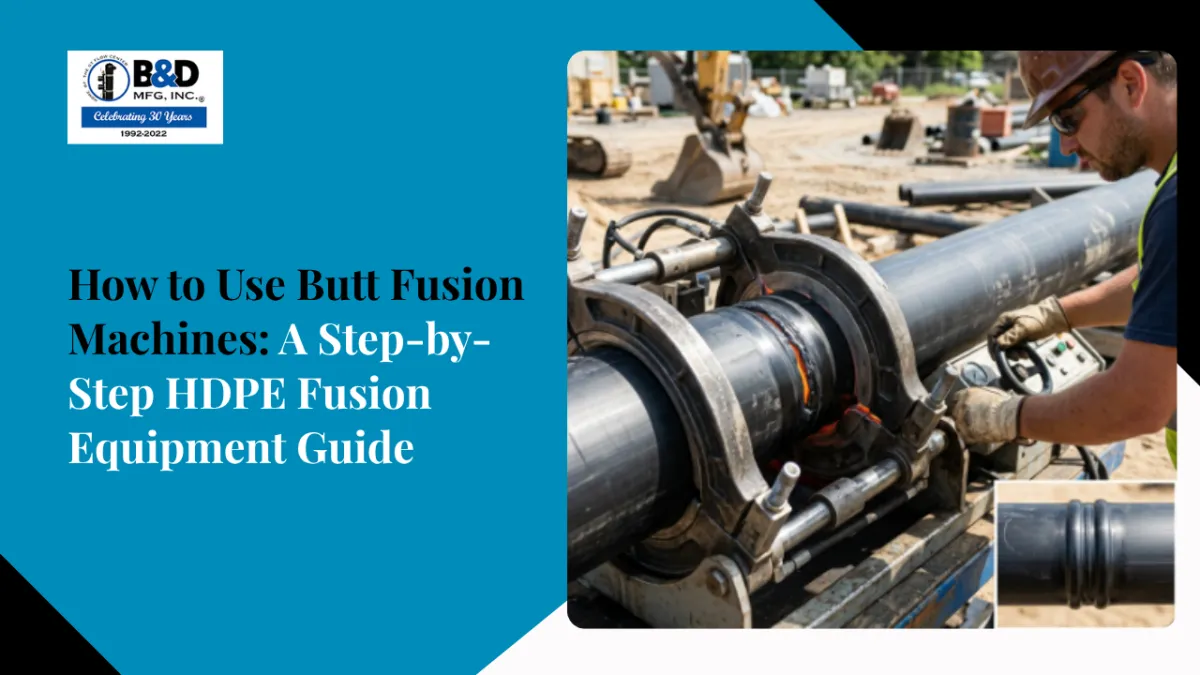
How to Use Butt Fusion Machines: A Step-by-Step HDPE Fusion Equipment Guide
Butt fusion machines join sections of HDPE (high-density polyethylene) pipe into a single, continuous, leak-free line. Because the joint is fused rather than glued or threaded, a properly made butt fusion weld can end up as strong as the pipe itself. That strength only shows up when the equipment is used correctly and every step of the process is followed in order.
This guide walks through how butt fusion machines work, the steps involved in a standard fusion weld, and what to look for when choosing fusion equipment for your crew or job site. Whether you are new to HDPE fusion or refreshing your process, use this as a practical reference alongside your equipment's operating manual and applicable fusion standards.
What Is a Butt Fusion Machine?
A butt fusion machine holds two pipe ends in aligned clamps, trims the ends flat and square, heats them with a heater plate until the material reaches a molten state, then presses the two ends together under controlled pressure until they cool and fuse into one piece. Machines range from small manual units for pipe as little as an inch or two in diameter up to hydraulic trailer-mounted systems built for large-diameter municipal and industrial pipe. B&D Mfg. carries butt fusion machines across that full range, from manual models for smaller IPS sizes to hydraulic trailer units built for large-diameter DIPS pipe.
Step-by-Step: How to Use a Butt Fusion Machine
The exact controls vary by machine and manufacturer, so always follow the specific operating manual for your model and the fusion procedure required by the applicable standard (such as ASTM F2620 or ISO 21307). In general, the process follows the same core sequence:
Set up and secure the machine. Position the butt fusion machine on stable, level ground or use a support stand or roller for longer pipe runs. Uneven support during fusion can pull the joint out of alignment before it cools.
Clamp the pipe ends. Load both pipe sections into the machine's clamps, matching pipe size to the correct liner or insert. The pipe should sit straight and centered, with the ends meeting evenly in the middle of the machine.
Face (trim) the pipe ends. Use the machine's planer/facer to trim both pipe ends flat, square, and parallel to each other. This step removes surface oxidation and any factory coating so the fusion surfaces are clean bare material.
Check alignment and gap. With the facer removed, bring the pipe ends together and check for a consistent, minimal gap and correct bead alignment. Misalignment at this stage carries through to the finished joint.
Heat the pipe ends. Insert the heater plate, set to the temperature specified for the pipe's material (commonly in the 400 degrees Fahrenheit range for standard HDPE, but always confirm against the manufacturer's chart), and bring the pipe ends into contact with the plate under the specified pressure and time.
Remove the heater and join the ends. Once the melt bead reaches the required depth, quickly remove the heater plate and bring the two pipe ends together under the fusion pressure called for in the procedure. Speed matters here. Too much delay lets the heated faces cool before contact.
Hold under pressure and let it cool. Maintain the joining pressure for the full specified cooling time before releasing the clamps. Rushing the cooling stage is one of the most common causes of a weak or failed joint.
Inspect the joint. Check the fusion bead for uniform size and shape all the way around the pipe. An even, consistent double bead is generally a good visual indicator; an uneven, undersized, or missing bead signals a joint that needs to be cut out and redone.
Choosing the Right Fusion Equipment for the Job
Picking the right machine up front makes the process above easier to execute consistently. A few factors to weigh:
Pipe size range: match the machine (and liner/insert set) to the IPS or DIPS range you fuse most often.
Manual vs. hydraulic/electro-hydraulic: manual machines suit smaller pipe and lighter-duty use; hydraulic and trailer-mounted machines are built for larger diameters and repetitive production work.
Portability: trailer-mounted and track-driven machines help on larger job sites where pipe has to be fused in place rather than brought to a shop.
Standards compliance: confirm the machine and its documented procedures support the fusion standard your project specifies.
B&D Mfg. stocks a range of butt fusion equipment, including manual units for smaller pipe runs and hydraulic trailer machines for larger-diameter fusion work, along with the HDPE butt fusion fittings to go with them.
Common Butt Fusion Mistakes to Avoid

Skipping or rushing the facing step, leaving oxidized or uneven material on the fusion surface.
Using the wrong heater plate temperature or holding time for the pipe material and wall thickness.
Letting the pipe ends cool too long between removing the heater plate and bringing them together.
Releasing clamp pressure before the full cooling time has passed.
Fusing in conditions (wind, cold, dust) that pull heat away from the joint faster than the procedure accounts for, without adjusting technique accordingly.
A Note on Training and Standards
Butt fusion is a repeatable process, but it is still a skill. Many utilities, municipalities, and contractors require operators to complete formal fusion training and, on many projects, to fuse sample joints that are then destructively tested before work begins. If your crew is new to HDPE fusion, pairing hands-on training with the fusion equipment manufacturer's documented procedure is the most reliable way to get consistent joints from day one.
Frequently Asked Questions
What sizes of pipe can a butt fusion machine handle?
It depends on the machine. Manual units typically handle smaller pipe, roughly up to 4 or 5 inches IPS, while hydraulic and trailer-mounted machines scale up to 8 to 14 inches IPS or more. Check the specific machine's rated range before selecting one for a job.
Can butt fusion machines be used on job sites, or only in a shop?
Both. Portable manual machines and trailer-mounted or track-driven units are designed for field use, including remote or rough-terrain sites, while shop setups are common for prefabricating fittings and pipe sections before delivery.
What is the difference between butt fusion and electrofusion?
Butt fusion joins two flat, matching pipe ends directly using heat and pressure from the machine itself. Electrofusion instead uses a fitting with embedded electric coils that heat and fuse the joint from within the fitting, which can be useful for tie-ins and repairs where a standard butt fusion machine cannot be positioned.
How long does a butt fusion joint take to set up?
Total time varies with pipe diameter and wall thickness, since heating time, cooling time, and clamp pressure all scale with pipe size. Always follow the timing specified in the machine's procedure or fusion chart for the exact pipe being joined rather than a general rule of thumb.
Do I need special training to operate a butt fusion machine?
Most projects that specify HDPE fusion also require operators to be trained on the specific procedure and, in many cases, to pass a qualification or bend-test before performing production welds. Check your project specifications and local requirements.
Get the Right Fusion Equipment for Your Next Project
Whether you need a manual unit for a small repair crew or a hydraulic trailer machine for large-diameter production runs, B&D Mfg. can help you find the right fit. Browse our full lineup of butt fusion machines or contact our team to talk through your pipe sizes, job conditions, and fusion standard requirements.
Looking for the fittings to match your fusion equipment? Explore our HDPE butt fusion fittings, or check out our socket fusion tools for smaller-diameter connections.