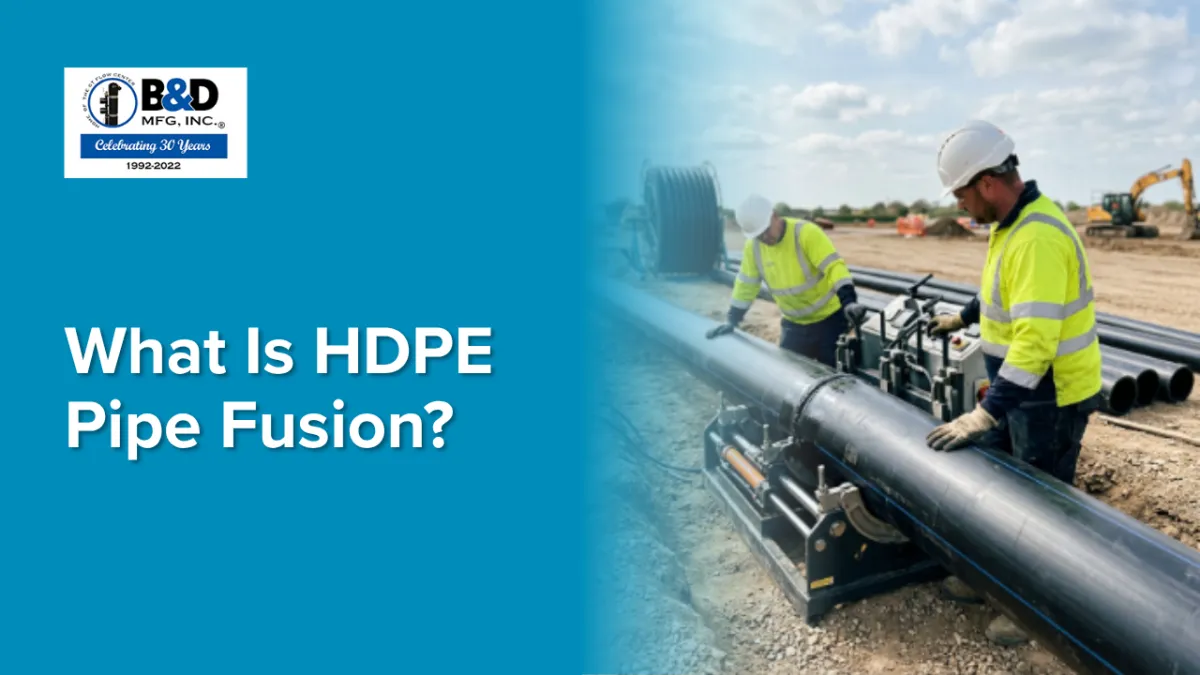
What Is HDPE Pipe Fusion? Complete Guide
If you work with polyethylene piping systems, you've likely heard the term HDPE pipe fusion used to describe how sections of pipe are permanently joined together. Unlike traditional metal piping, which relies on threading, gluing, or mechanical clamps, high-density polyethylene (HDPE) pipe is joined through a heat-fusion process that literally melts the pipe material together, creating a single, continuous piece of plastic with no seams, gaskets, or moving parts to fail. This guide breaks down what HDPE pipe fusion is, the different fusion methods used in the field, and why the process has become the industry standard for water systems, gas distribution, and geothermal pipe welding.
Understanding HDPE Pipe Fusion
HDPE pipe fusion is a thermal joining process where two pieces of polyethylene pipe or fittings are heated to a precise temperature until the material becomes molten at the joint surfaces, then pressed together under controlled pressure. As the material cools, the molecules from each piece intermingle and re-solidify, forming a joint that is often stronger than the surrounding pipe wall itself. Because the joint becomes a homogenous part of the pipe rather than a separate connector, fused HDPE systems are highly resistant to leaks, corrosion, and root intrusion, making them ideal for buried and underground applications.
Achieving a reliable fused joint depends on three variables: heat, time, and pressure. Get any one of them wrong and the joint may look acceptable on the surface while remaining structurally weak underneath. That's why fusion technicians rely on purpose-built fusion equipment rather than improvised heat sources, and why proper training and calibrated tools are non-negotiable on any HDPE project.
The Three Main Types of HDPE Pipe Fusion
There isn't just one way to fuse HDPE pipe. The right method depends on pipe diameter, wall thickness, application, and field conditions. The three most common techniques are butt fusion, socket fusion, and electrofusion.
Butt Fusion
Butt fusion is used to join two pipe ends (or a pipe to a fitting) of the same diameter, end to end. Both surfaces are faced flat, heated simultaneously with a heater plate, and then pressed together under hydraulic pressure until the joint cools. Butt fusion is the go-to method for larger-diameter mainlines and long pipe runs, and it's typically performed using a butt fusion machine that clamps the pipe in place and automates the heating and pressure cycle for consistent, repeatable results.
Socket Fusion
Socket fusion is generally used for smaller-diameter pipe, typically 2 inches and under. A heated tool simultaneously heats the outside of the pipe and the inside of a fitting socket; the two are then pushed together so the pipe seats inside the fitting as it cools, forming a fused bond. This method is fast, portable, and well-suited to service lines, manifolds, and tight spaces. Technicians typically use socket fusion irons and kits along with socket fusion tools to ensure the correct heat soak time and insertion depth for a sound joint.
Electrofusion
Electrofusion uses specialty fittings with embedded electric heating coils. Once the pipe is inserted into the fitting, a control processor applies a precise electric current that heats the coil, melting the interior surface of the fitting and the exterior of the pipe simultaneously. Electrofusion is especially valuable in confined trenches, repairs, or tie-ins where a butt fusion machine won't fit, and it removes some of the alignment guesswork of manual methods. B&D Mfg. offers a full line of electrofusion fittings and electrofusion processors built for exactly this kind of precision joining.
Why HDPE Pipe Fusion Is Critical for Geothermal Pipe Welding
Geothermal heating and cooling systems circulate a water-based fluid through a network of buried HDPE loops, sometimes thousands of feet of pipe per borehole field. Because these loops are buried and backfilled, often permanently inaccessible once the system is commissioned, there is zero tolerance for a failed joint. This is where geothermal pipe welding and standard HDPE fusion techniques intersect: geothermal contractors rely on the same butt fusion and electrofusion principles used in municipal water and gas work, but apply them to smaller-diameter loop piping, headers, and manifolds under demanding site conditions.
A single weak fusion joint in a geothermal loop field can mean excavating a finished yard, parking lot, or foundation to repair a leak, an expensive and disruptive outcome that proper fusion practice prevents entirely. Contractors typically fuse individual loops using butt or socket fusion, then connect them at the surface using underground headers and manifold assemblies before backfilling. Because geothermal work often takes place at remote well sites, portable and dependable fusion equipment isn't a convenience, it's a requirement.
The HDPE Fusion Process, Step by Step
While the specifics vary by method, most HDPE fusion jobs follow the same general sequence:
Prepare the pipe: cut ends square, clean surfaces, and remove any oxidation or debris.
Align and clamp: secure the pipe or fitting in place to keep the joint from shifting during heating.
Heat: apply a calibrated heater plate, iron, or electrofusion coil for the manufacturer-specified time and temperature.
Join under pressure: bring the melted surfaces together and hold them at the correct pressure while the joint cools.
Cool and inspect: allow the joint to cool undisturbed, then visually inspect the bead or fusion indicators for a uniform, defect-free bond.
Skipping steps or rushing the cooling period is one of the most common causes of joint failure in the field. Following the pipe and fitting manufacturer's fusion procedure, and using equipment that automates temperature and pressure control, removes most of the variability that leads to weak joints.
Choosing the Right Fusion Equipment

Selecting the correct fusion equipment starts with matching the tool to the pipe diameter, wall thickness, and job site. For large-diameter mainline work, a hydraulic butt fusion machine capable of handling the pipe's IPS range is essential. For smaller service lines and repairs, a socket fusion kit offers portability without sacrificing joint quality. And for tie-ins, repairs, and tight trenches, electrofusion equipment provides a reliable alternative when a full butt fusion setup isn't practical.
It's also worth considering total cost of ownership: reliable equipment that holds calibration reduces failed joints, callbacks, and re-excavation costs down the line. Pairing your fusion machine with quality HDPE fittings from the same trusted supplier also helps ensure compatibility across your entire piping system.
Common Applications of HDPE Pipe Fusion
Municipal water distribution and transmission mains
Natural gas distribution piping
Geothermal ground loops, headers, and manifolds
Industrial process piping and chemical transfer lines
Landfill leachate and gas collection systems
Mining and dewatering piping
Tips for Achieving Strong, Leak-Free Fusion Joints
Always follow the pipe manufacturer's specific fusion parameters for temperature, time, and pressure.
Keep heater plates and irons clean, and check that they hold accurate temperature before each use.
Protect the work area from wind, rain, and dust, which can all affect fusion quality.
Train technicians on proper technique and require documented fusion logs for critical joints.
Inspect every joint's fusion bead or indicator before backfilling or pressure testing.
Frequently Asked Questions
How strong is a fused HDPE joint compared to the pipe itself?
When performed correctly, a fused HDPE joint typically exceeds the tensile strength of the surrounding pipe wall. Because the joint is a true molecular bond rather than a mechanical connection, the pipe itself, not the joint, becomes the weakest point in the system.
Can HDPE pipe fusion be performed in cold weather?
Yes, but cold ambient temperatures affect cooling times and can make heater plates lose heat faster. Most fusion equipment manufacturers publish cold-weather adjustment charts, and technicians should also consider windbreaks or enclosures to keep conditions consistent, especially for geothermal pipe welding projects that often continue through the fall and winter installation season.
How do I know which fusion method is right for my project?
Pipe diameter is usually the deciding factor: larger mainlines call for butt fusion, smaller service lines and tight spaces favor socket fusion, and repairs or tie-ins where alignment is difficult are best handled with electrofusion. A qualified fusion equipment supplier can help match the right machine and fittings to your specific application.
Final Thoughts
HDPE pipe fusion isn't just a joining method, it's the reason polyethylene piping systems can deliver decades of leak-free service underground, whether that's a municipal water main or a geothermal loop field buried beneath a customer's backyard. Understanding the differences between butt fusion, socket fusion, and electrofusion, and using the right fusion equipment for each job, is what separates a system built to last from one destined for costly repairs.
B&D Mfg., Inc. supplies contractors and geothermal installers with a complete lineup of butt fusion, socket fusion, and electrofusion equipment, along with the fittings and accessories to complete the job. Visit bdmfginc.com to explore our full product catalog or reach out to our team for help selecting the right fusion equipment for your next project.