Geothermal Pumping Modules Work
Geothermal energy systems are among the most efficient and environmentally responsible heating and cooling solutions available today. But behind every high-performing geothermal system is a critical component that often goes unnoticed — the geothermal pumping module. Also known as a geothermal flow center, this assembly is the circulatory heart of the entire system, keeping the heat transfer fluid moving continuously between your home and the earth.
At BDM Manufacturing, we design and build geothermal pumping modules engineered for long-term performance, energy efficiency, and ease of installation. In this guide, we'll break down exactly how these modules work, what makes a quality geothermal flow center, and why the right circulation pump makes all the difference.
What Is a Geothermal Pumping Module?
A geothermal pumping module, commonly called a geothermal flow center, is a pre-assembled unit that manages the flow of heat transfer fluid through the ground loop of a geothermal heat pump system. This fluid, typically water mixed with an antifreeze solution, circulates between the buried ground loops and the heat pump unit inside your building.
Think of the pumping module as the engine that drives this closed-loop exchange. Without it, the thermal energy absorbed from or rejected to the ground simply cannot reach the heat pump where it's needed. A well-designed flow center ensures consistent fluid movement, stable pressure, and optimal flow rates, all of which directly impact system efficiency and longevity.
Key Components of a Geothermal Flow Center
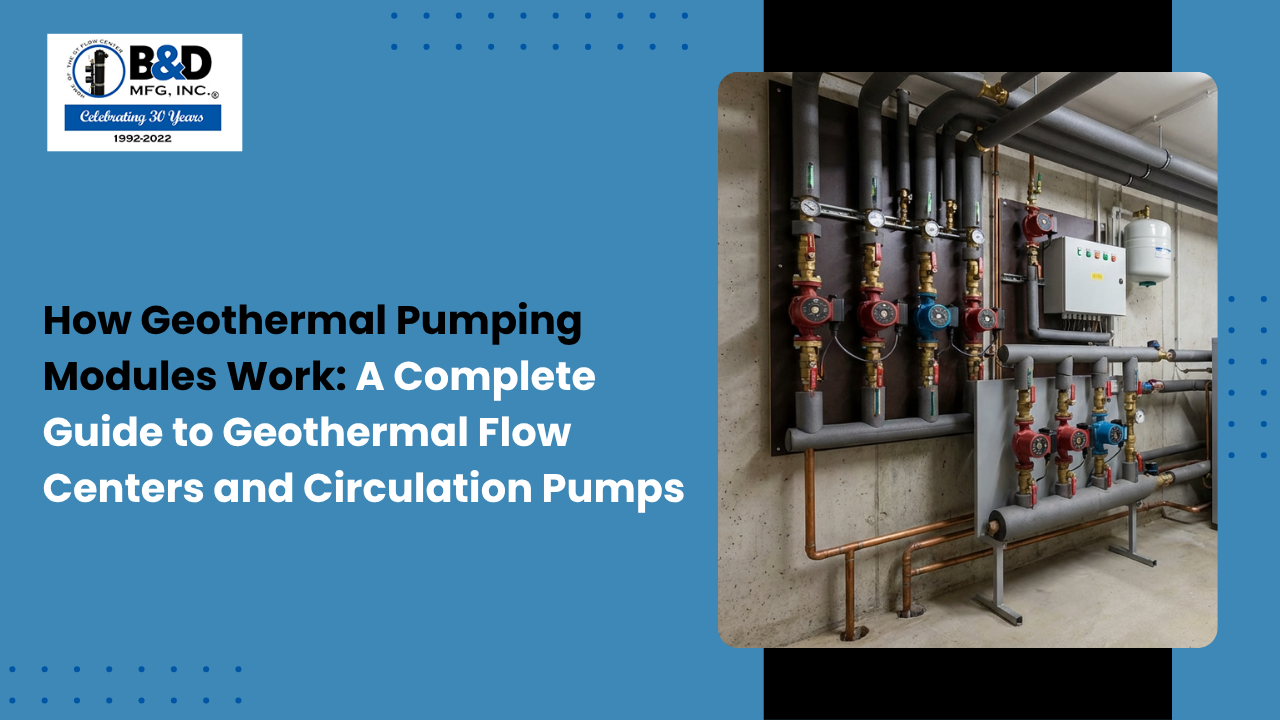
A complete geothermal pumping module typically includes several integrated components working together:
1. Geothermal Circulation Pumps
The geothermal circulation pump is the workhorse of the flow center. It drives the heat transfer fluid through the ground loop at a controlled rate. Selecting the right pump is critical, too little flow reduces heat exchange efficiency, while too much flow wastes energy and accelerates wear. Modern high-efficiency ECM (electronically commutated motor) circulation pumps allow variable speed operation, automatically adjusting flow to match system demand. This dramatically reduces electrical consumption compared to fixed-speed models.
2. Isolation Valves and Ball Valves
Isolation valves allow technicians to shut off flow to individual sections for maintenance or replacement without draining the entire system. Quality flow centers include full-port brass ball valves rated for the pressures and fluids used in geothermal applications.
3. Pressure Gauges and Flow Meters
Monitoring pressure and flow is essential for diagnosing system problems and verifying correct operation. A properly equipped geothermal flow center integrates gauges that give technicians immediate insight into system status at a glance.
4. Purge Ports and Flush Connections
When a geothermal system is first installed or serviced, air must be purged from the ground loop. Dedicated purge ports make this process fast and clean, ensuring the loop is fully primed before startup.
5. Insulated Housing or Cabinet
To prevent condensation and heat loss, quality pumping modules are enclosed in insulated cabinets. This is especially important in installations where the module is located in unconditioned spaces. BDM Manufacturing's modules feature durable, well-insulated housings designed for years of reliable performance in any environment.
How Geothermal Circulation Pumps Work: The Heat Transfer Process
Understanding how a geothermal pumping module works requires a quick look at the overall geothermal system loop:
The geothermal circulation pump activates and begins moving heat transfer fluid through the supply line.
Fluid travels down into the buried ground loop, a series of pipes installed horizontally in trenches or vertically in boreholes, depending on the site.
In heating mode, the fluid absorbs thermal energy from the earth, which maintains a relatively stable temperature year-round (typically 45°F–75°F depending on geographic location).
The warmed fluid returns through the return line to the geothermal heat pump inside the building.
The heat pump extracts thermal energy from the fluid, concentrates it, and distributes it as heat throughout the structure.
The cooled fluid then travels back out through the geothermal flow center and into the ground loop again to repeat the cycle.
In cooling mode, the process reverses, the heat pump removes heat from the building and rejects it into the cooler earth via the fluid loop.
The geothermal pumping module manages this circulation continuously and efficiently. Because the ground maintains a stable temperature regardless of outdoor weather conditions, geothermal systems can achieve efficiencies of 300%–500% — meaning for every unit of electricity used to run the pump and heat pump, three to five units of thermal energy are delivered.
Types of Geothermal Flow Center Configurations
Not every geothermal system is the same, and flow centers come in several configurations to match different installations:
Single-Pump Flow Centers
Designed for smaller residential systems or installations with a single ground loop zone. These are compact, cost-effective, and straightforward to install. They suit most standard single-zone residential geothermal heat pump systems.
Dual-Pump Flow Centers
Larger homes and commercial applications often require dual-pump configurations for added flow capacity or redundancy. If one pump requires maintenance, the other can maintain partial operation, reducing system downtime. BDM Manufacturing offers dual-pump modules engineered for larger residential and light commercial geothermal installations.
Multi-Zone Flow Centers
Complex buildings with multiple geothermal zones require manifolded flow centers that can direct fluid to different loop fields independently. These systems require careful design to balance flow across all zones and ensure uniform heat exchange.
Why Flow Rate and Pump Sizing Matter
One of the most common mistakes in geothermal system design is improper pump sizing. The geothermal circulation pump must move fluid at the right rate for the specific ground loop length, pipe diameter, and heat pump capacity.
Industry guidelines generally recommend a flow rate of 2.5 to 3 gallons per minute per ton of heat pump capacity for standard loop configurations. Too little flow results in excessive temperature differentials across the loop, reducing heat pump efficiency and potentially causing freeze protection issues. Too much flow increases pumping energy consumption without a proportional gain in heat transfer — and can create turbulence and noise within the loop.
BDM Manufacturing's geothermal pumping modules are sized and specified for precise compatibility with the heat pump systems they serve. Our engineering team accounts for loop length, pipe sizing, fluid type, and system capacity to deliver a perfectly matched solution every time.
Installation and Maintenance of Geothermal Flow Centers
A quality geothermal flow center is built for minimal maintenance, but a few practices ensure long-term reliability:
Annual visual inspections of the pumping module for leaks, corrosion, or unusual noise.
Periodic verification of fluid chemistry, antifreeze concentration should be checked every few years to ensure freeze protection is maintained.
Monitoring pressure gauges to confirm the loop remains properly charged and pressurized.
Checking pump performance data (on systems with ECM pumps) via the pump controller to identify efficiency trends.
Cleaning or inspecting strainers if included in the system.
Because BDM Manufacturing's flow centers are pre-assembled and factory-tested before shipment, installation is straightforward for qualified HVAC technicians. All connections are clearly labeled, and our modules are designed for quick commissioning, reducing installation time and labor costs.
What Sets BDM Manufacturing's Geothermal Pumping Modules Apart
At BDM Manufacturing, we bring decades of manufacturing expertise to every geothermal flow center we produce. Our modules are built to meet the demanding requirements of residential, commercial, and industrial geothermal applications.
Factory-assembled and pressure-tested before delivery, so installation is fast and reliable.
Compatible with all major geothermal heat pump brands and loop configurations.
Available in single-pump and dual-pump configurations to match system size.
High-efficiency ECM circulation pump options for reduced operating costs.
Durable construction with corrosion-resistant materials for long service life.
Custom configurations available for large commercial and industrial geothermal projects.
Expert technical support to help contractors and engineers specify the right module for every application.
Whether you're a geothermal contractor looking for a reliable supply partner or a developer specifying equipment for a large project, BDM Manufacturing has the geothermal pumping module solution you need.
Frequently Asked Questions About Geothermal Flow Centers
How long do geothermal circulation pumps last?
Quality geothermal circulation pumps typically last 15–25 years with proper maintenance. Because they operate in a closed, clean loop, they experience far less wear than pumps handling open water systems. ECM-motor pumps also run at lower speeds much of the time, further extending their service life.
Can I replace just the pump in my geothermal flow center?
In most cases, yes. BDM Manufacturing's flow centers are designed with serviceability in mind. Isolation valves allow the circulation pump to be replaced without draining the ground loop, minimizing downtime and service costs.
Do geothermal flow centers need electricity to operate?
Yes, the geothermal circulation pump requires electricity to operate. However, modern high-efficiency ECM pumps consume significantly less power than older fixed-speed pumps. In a well-designed system, circulation pump energy consumption represents only a small fraction of overall system operating costs, and the geothermal system as a whole still delivers dramatically lower energy bills compared to conventional HVAC systems.
What fluid is used in geothermal ground loops?
Most geothermal systems use a water-based antifreeze solution, typically propylene glycol or methanol mixed with water, in the ground loop. The antifreeze concentration is selected based on local soil temperatures and minimum design conditions to prevent freeze-up. The geothermal flow center must be compatible with the specific fluid used in the system.
Ready to Specify the Right Geothermal Pumping Module?
The geothermal pumping module is the unsung hero of every geothermal heating and cooling system. Without a properly sized, well-built flow center, even the best ground loop and heat pump cannot deliver their full performance potential. Investing in a quality geothermal flow center from BDM Manufacturing means investing in years of reliable, efficient, low-maintenance operation.
Browse our complete line of geothermal flow centers and pumping modules at bdmfginc.com, or contact our team today to discuss your project requirements. Our experts are ready to help you specify the ideal solution — whether you're outfitting a single-family home or engineering a large commercial geothermal installation.